

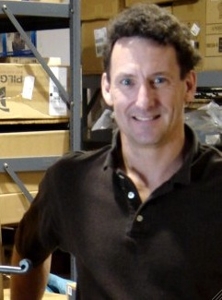
Richard Sexton has parlayed his 10 years of brick-and-mortar success into a dynamic multichannel sales business with Carolina Rustica. With a combination of brick-and-mortar and online sales, Carolina Rustica expects to generate about $3.5 million in 2006, a 30 percent increase from the previous year. Approximately 15 percent of his total sales come from his brickand- mortar stores, and 85 percent come from his online sales channels. Sexton is looking at adding additional brick-and-mortar locations, but continues to take a conservative approach to company growth.
PeC: Why was Carolina Rustica started?
 Sexton: I started with a large brick-and-mortar store called Himal Home Gallery in Charlotte in 1996. It was a fairly traditional furniture store that I also supplemented with imports from Asia and a local art gallery. That was at the very beginning of ecommerce. We went online in 1998 and put some of our best-selling products, like iron beds, online and it really took off. We launched our website and it grew to the point where we needed an updated site with a dedicated staff.
In 2000, I launched Carolina Rustica, and we have been growing ever since. Brick-and-mortar by itself is always a challenging environment, and we just followed that lead as Internet sales started to increase and evolved into Carolina Rustica. It really has been one step at a time, very sequential, very controlled in terms of how we grow and how we build the business. We started with basically one supplier and now have over 60 suppliers with 12,000 SKUs online. We have a warehouse, call center and retail store with a full-time staff of 10.
PeC: Do you sell products through other channels or only through your website?
Sexton: We sell through our own site, our retail store, Amazon, Shop.com and Google Base. It’s been very interesting watching the percentages changes. We do about 15 percent of our sales through our brick-and-mortar and 85 percent through Internet-based channels. Interestingly, Amazon has really started to increase as a percentage; it’s perhaps 15 percent of Internet sales. We also sell through Shop.com, and that’s been increasing as well. We plan on selling through other channels as they come available. It’s interesting to see how that mix is evolving as certain players are gaining in strength.
PeC: How do you manage all the orders and paperwork from the various sales through all these sales channels?
Sexton: That is a huge, huge challenge. We use a product called Order Manager from Stone Edge which ties into the back end of our proprietary shopping cart as well as Amazon and Shop.com. It can also bring in orders from other channels as well. It’s a very interesting product, and they are constantly upgrading it. It’s not really expensive for what you can get out of it. First and foremost, we are totally focused on customer service, and what Order Manager lets us do is consolidate orders from whatever channels we chose to sell through and treat each order the same on the back end of our system. Prior to that, every Amazon order was an exception outside of our system. Order Manager helps us continue to grow without hiring a huge amount of additional people.
PeC: How do you market your store?
Sexton: Marketing is done primarily through a balance of organic search and pay-per-click, supplemented by email newsletters and print ads for our local store.
PeC: What challenges have you faced launching your business and how have you addressed those?
Sexton: Our pay-per-click costs have tripled over the last year. New sites are coming in all the time and just throwing money at Google and Yahoo! to keep their No. 1 spot. It has definitely hurt our margins trying to compete, and these sites come and go. So now we really concentrate on striking a balance between organic search and pay-per-click, eliminating any redundant pay-per-click listings.
PeC: How do you find distinctive products to sell?
Sexton: We have been in brick-and-mortar retail for over 10 years, so we find our products at the major buyers’ markets such as Dallas, Atlanta, etc. We also design and manufacture some of our own products, which are imported. We inventory as much as we can in our warehouse for quick turnaround. Our “instant gratification” items, such as towel bars, we keep in inventory. For the more sophisticated items that might have several options, we have to order them as the order comes in. We’ll either have them shipped to the warehouse or drop shipped. We prefer to have them sent to the warehouse to ensure quality control before the customer gets the product.
PeC: What research did you do prior to launching your site?
Sexton: I have been doing Internet marketing for about nine years now, and everything I’ve learned has been from reading newsletters, visiting other sites and correcting my own numerous mistakes.
PeC: Any particular technology struggles in the early days you can share that can serve as an inspiration to young companies building a business today?
Sexton: It’s a very different game now with lots of money pouring into the search engines. Keep your site basic, informative and simple to navigate. Organic search is still the best deal out there, no matter how much time it consumes. Also, you can’t outsmart the search engines. You will just get into trouble if you try.
PeC: How did you decide on using your current shopping cart?
Sexton: We started with a shopping cart that was very crude. I don’t remember the vendor, but it was basically a “buy me now” button that you’d put on (the site). It was OK for our business because our business wasn’t that sophisticated. But now, with more than 60 vendors and well over 12,000 SKUs … it’s become more complicated. We have never really been focused on a particular shopping-cart solution. Many companies try to offer all-in-one ERP solutions, but these solutions wind up compromising the front end, which defines the user experience. We currently use a highly-customized PHP cart which is great for how we want to display our products. That also presents some limitations to us as well. We’ve tacked on to the front end and back end, so it probably won’t be sufficient as we continue to grow. As we get to 50,000 SKUs, we’ll probably need some other solution as well.
PeC: Do you utilize any special software on your site to improve the shopping experience for customers?
Sexton: We use SLI Systems’ Learning Search and Site Champion. Learning Search takes your search results and prioritizes them in terms of popularity of click-throughs, gives corrected spellings or suggestions, gives different category suggestions for that products, etc. Site Champion indexes the search results and feeds them into Google so you can get increased traffic through pages that appear on Google and other search engines as well. More and more consumers are getting used to search options, and that’s why site search is so important. All this happens on SLI’s servers so it never compromises our site’s performance.



 SEO Takeaways from SGE's Partial Rollout
 ChatGPT vs. Gemini for SEO Tasks
 BNPL Competition Drives Wins for Merchants
 Google Ad Updates Reflect New SERPs
 New Ecommerce Tools: April 2, 2024
 5 Content Marketing Ideas for May 2024
 The Profitable Seller: Mastering Amazon FBA