

Facebook states that on Friday, March 30, it will convert all Fan pages to the new Timeline format. The most obvious component of Timeline is the large cover image at the top of the page.
Facebook has restrictions on these images. They cannot contain the following elements.
- Price or purchase information. Examples include “40% off” or “Download it at our website.”
- Contact information. Web address, email, mailing address or other information intended for the Page’s “About” section.
- References to user interface elements. This includes “Like” or “Share” or any other Facebook site features.
- Calls to action. This could be statements such as “Get it now” or “Tell your friends.”
To help businesses prepare for the Timeline change, here are six best practices, with examples, for creating acceptable cover images.
1. Optimize the Size
Facebook says cover images should be at least 399 pixels wide. However, the optimum size is 855 pixels wide x 350 pixels down the page. Some articles I’ve read suggest slightly different dimensions — such as 850 x 315 — but most recommend 855 x 350.
2. Center or Right-align the Focal Point
Due to the fact that the page avatar — i.e., the icon — is inset in the lower left-hand corner of the cover, it’s best to either use an image that has no particular focal point or, if one exists, align it to the center or right-hand side. Here are two examples.
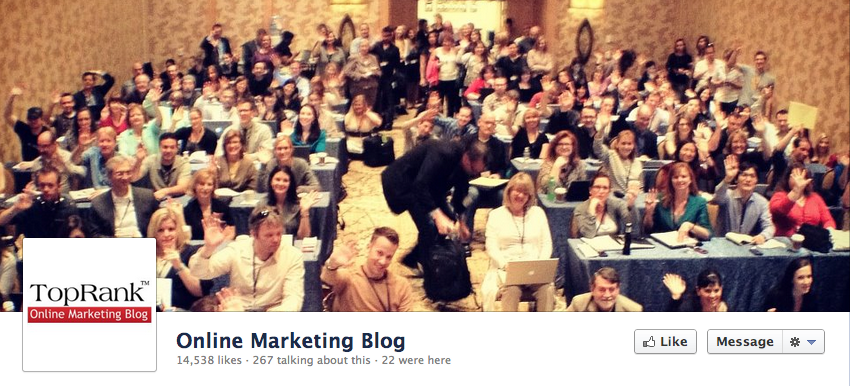
TopRank Marketing’s cover photo has no particular focal point. Enlarge This Image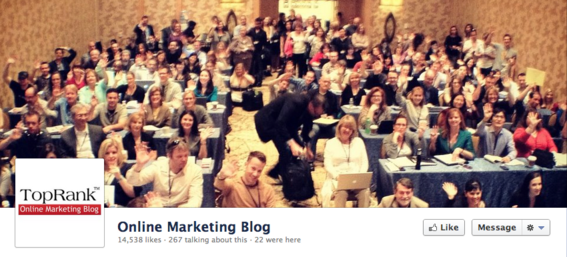
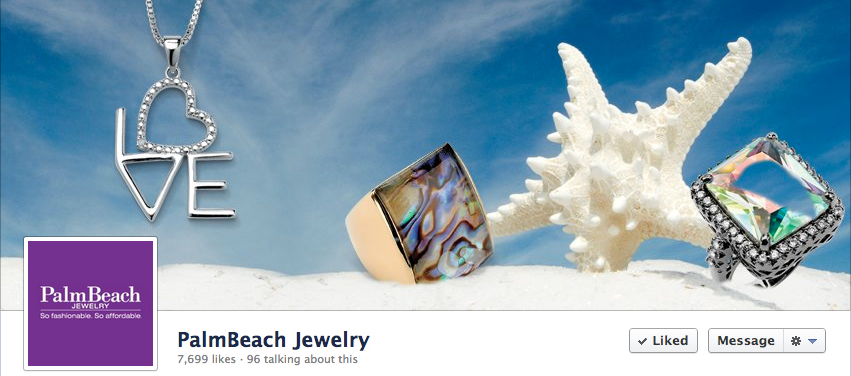
Palm Beach Jewelry’s cover has a right-aligned focal point. Enlarge This Image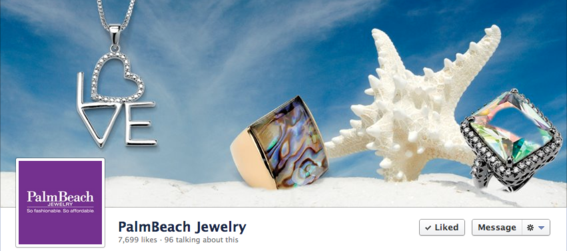
3. Abide by Facebook’s Requirements
The cover image may look like a billboard and, as such, the temptation may be to build in promotional elements. I don’t know how Facebook plans to monitor the millions of images that are soon to be uploaded, but it’s best to abide by the rules from the outset rather than be forced to make changes later.
Here are two examples of covers that may cross the line.
This cover contains elements forbidden by Facebook. Enlarge This Image
Notice the call to action, which encourages visitors to “get your copy” along with an arrow pointing to the “Like” button. Though no mention is made to Like the page, the inference is obvious and, therefore, questionable. Calls to action are forbidden.
The use of a web address is prohibited on cover images. Enlarge This Image
According to Facebook’s requirements, the use of a web address — as seen in this cover — is prohibited.
4. Think Branding
Absent the ability to incorporate overt promotional elements, get creative and use images that present the uniqueness of your brand. That’s what large retailers are doing and it can also work for smaller ecommerce merchants. Here are some good examples of this approach.
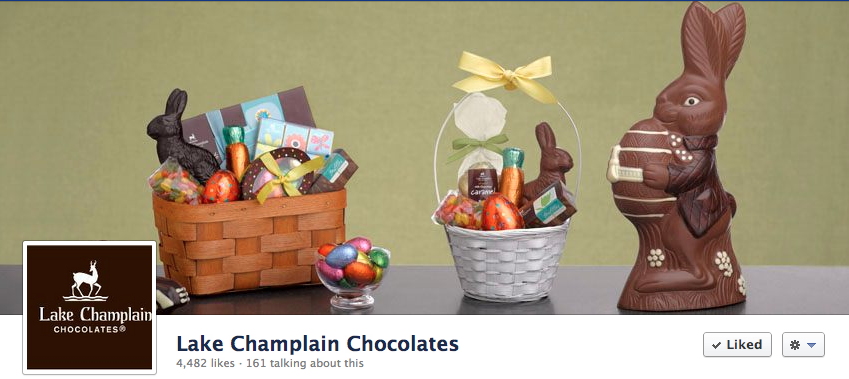
Lake Champlain Chocolates cover image. Enlarge This Image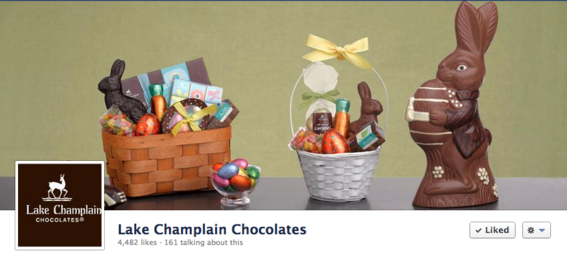
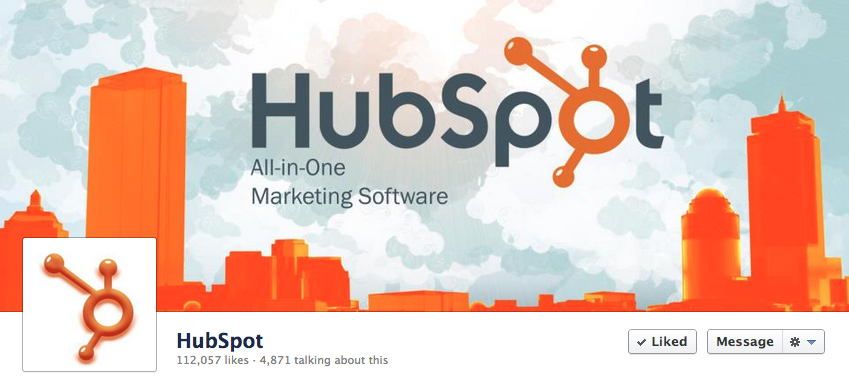
Hubspot’s cover uses its logo as the focal point. Enlarge This Image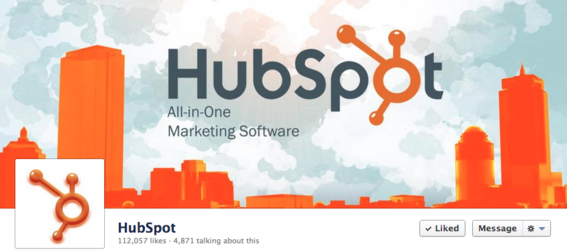
Magnolia Bakery’s cover features its products. Enlarge This Image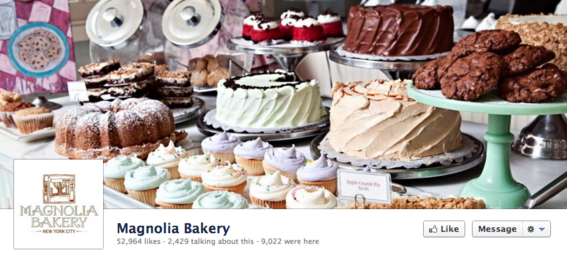
5. Update Often
To keep your page looking fresh, update images frequently — at least once a month. You can also update image around holidays, or special occasions.
6. Use Apps for Promotion
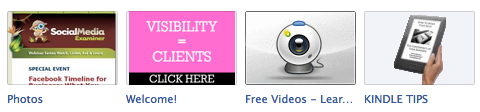
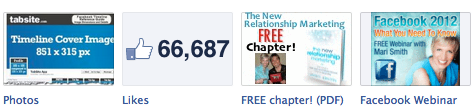
Even though the cover image cannot contain promotional elements, app icons located just beneath the cover can. Facebook allows page owners to change images associated with custom apps and rename them with a call to action message. Here are two examples.
App icons can contain promotional text and images. Enlarge This Image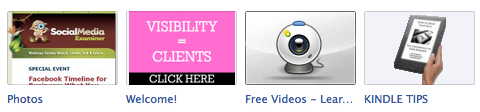
Another example of app icons with promotional messages. Enlarge This Image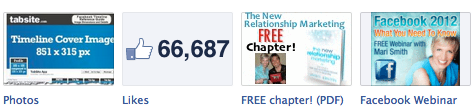
Conclusion
After March 30, Facebook will force page owners to switch to Timeline. Use the change as an opportunity to enhance your company’s image with the use of attention-getting cover images that tell the story of your brand and present your unique value proposition.





 ChatGPT vs. Gemini for SEO Tasks
 SEO Takeaways from SGE's Partial Rollout
 5 Content Marketing Ideas for May 2024
 BNPL Competition Drives Wins for Merchants
 Google Ad Updates Reflect New SERPs
 New Ecommerce Tools: April 2, 2024
 The Profitable Seller: Mastering Amazon FBA