Interview with Russian Ecommerce Businessman
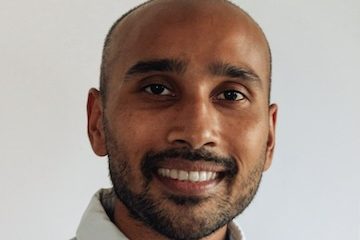
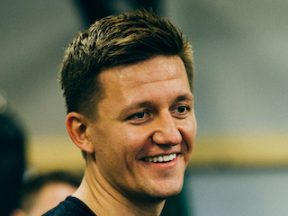
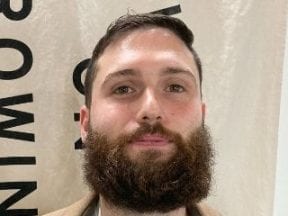
Today I am bringing to you an interview with a successful online businessman from Russia, Pavel Kapysh. He is 25, lives in Saint Petersburg and currently owns multiple high-visited websites in Russian — about 200,000 unique visitors altogether monthly — that bring him a significant profit. Two of his sites are TEKKU.ru and DriveBlog.ru.

Pavel is a very interesting young man, a living proof of the huge financial potential Russian Internet has. In this interview he tells his success story (which has just begun), shares his views on eCommerce in Russia and Germany and the future of online-market in Russia.
Konstantin: Hello Pavel! Tell for how long have earned your living with online business only?
Pavel: Hi, Konstantin. I earned my first money at 14 using computer: I used to make and print price tags for three shops near my home. The Internet was extremely unreachable at the time. I could use a dial-up connection in my father’s friend's house for about an hour a month.
In January 2003 I got interested in everything connected with gadgets and the growing Internet. I got a 3-inch mini-CD MP3-player and decided to write an article about it. I also decided to sell the article to a huge online-magazine on Runet.
Note: The magazine is 3D News. Here is the article, in Russian.
I sent it to three magazines and one of them accepted it, and so I got my first $27 along with a job offer. I started writing reviews and, later, news. With all that happening I got a remote job in another magazine. That's the moment I decided I needed to go further and started studying forums on the subject of the web moneymaking.
At the end of 2004 I registered my first .ru domain name (in Russia in those days that meant concluding a treaty in writing, approved by a lawyer in a personal meeting). In 2005 I quit the magazine I worked in. I devoted myself to commercial photography for photostocks to make a living (actually, I still keep getting money from them).
One can say my online-only business started in 2005.
Konstantin: Why working online? Why have you chosen this path?
Pavel: Well, I am Capricorn and value independence most. I needed free schedule and no boss. That's why I got in online-business. And only the persistence I have allowed me to get my first profit.
Konstantin: How exactly is your business profitable?
Pavel: I own more than 40 thematic web-projects that are on many reasons ads placement-friendly. That includes banners, context ads, paid reviews, and other tying services. More than half of profit is brought by affiliate programs, the rest comes from the direct ads placement.
Konstantin: How successful do you consider you business in its current state?
Pavel: I measure successfulness with comfort and growth dynamics. Every year at the same period my profit doubles. I try to stick with the 8-10% monthly profit growth dynamics. I am quiet comfortable now and the dynamics makes me happy :-)
Konstantin: As far as I know your business is mostly Russia-oriented: you work with Russian audience and with Russian developers.
Pavel: Yeah, I work for the Russian-speaking audience, but there recently have appeared several experimental projects for English-speakers. I have a Russian-speaking team containing people from Russia, Ukraine and Belarus.
Konstantin: I know you've spent several years in Germany, even wanted to stay there. Please tell a little about managing a Russia-based project from abroad?
Pavel: That's actually very easy with the help of Skype, Google Docs, DropBox, etc. There's also a book that helped me a lot — Rework by the 37signals founders. Working remotely in the boundless information space in far more effective and advantageous than doing it in an office. I made sure of that according to my personal experience. Also, there's a convenient possibility to pass tasks to freelancers in case they're not finished on time.
Another great advantage in working with remote employees is the labor price. I am loving to deal with great Ukrainian and Belarusian specialists who agree to work for relatively moderate fees.
At the time I have a steady team that does all my projects work. There are three content-managers, a designer and two programmers, one is responsible for web programming and the other for the Adobe Flex adds.
Konstantin: How long did you live in Germany and what stopped you from staying there permanently? You eventually returned, is Germany no good enough for living and working? And why do you think Russia is better in this sense?
I spent altogether 2 years there, first in Bonn, then in Essen and in the end in Dusseldorf. I really liked it in the beginning, liked to manage business remotely.
At the same time I learned German and even entered a private design school to develop my photography skills and see how real professionals in task handling work. But after three months I understood this education suits perfectly to those willing to be employed.
It was all fine in Germany until I faced German life and manners. Their way of life completely did not and still does not suit me. There's lot of bureaucracies and rules that sometime contradict one another.
There is very much money in Russia and Russian Internet has not even reached its peak, audience grows, investors keep coming, and it is just the beginning. Runet is on the level of English-speaking Internet as it was 5 years ago.
Konstantin: Do you think it is possible for a foreigner to run the same business as yours in Russia? What would they need to?
Pavel: Certainly yes! That's a very popular scheme of making money in the US, for instance. But one should keep in mind the differences Russia has. For example, the biggest search market player is not Google, but Yandex, and the social network number one is not Facebook, but Vkontakte.
Konstantin: A couple of practical issues: what payment systems do you use? PayPal, Yandex.Money, Webmoney? And how did you handle money transfer from and to abroad?
Pavel: At the moment I use WebMoney and a little Moneybookers. What I do like in Russia in contrast to Germany is a huge number of payment systems and services to cash money in a couple of seconds at any time of a day.
Living in Germany I used to use official exchange points. To transfer any sum of money from WebMoney to a bank account I had to wait 1-2 days, and that is if it's not weekend. So I just transferred money to a debit Visa card of a Russian bank.

Talking about banks in Russia everything is just fine here. The service gets more modern and convenient every year. The only useful thing there is in Germany and is not in Russia is the possibility to pay directly from a bank account in online-shops. Alas, that feature is unlikely to appear in Russia, the reason is Russian hackers who have already once put their hands on PayPal.
And talking about PayPal, I used it a couple of times abroad, but I don't like the policy of this payment system — unfriendly interface and comparatively high commission.
Konstantin: What irritates you the most about Russia? Is it Kindle they don’t ship here? PayPal you can’t use here? Maybe the bloody regime? :-) In general, what does Russia lack the most in the area of business-friendly environment?
Pavel: Before moving to Europe there was plenty of such things. And now having this experience I came to a conclusion that the problems are more or less the same everywhere. About the bloody regime you mentioned: I'd like to notice that both here and there people wish to have social guarantee that they will be fine doing as little as possible.
I am deeply sure happiness and comfort are created by a man himself. Creating and having pleasure from doing it is a guarantee of personal happiness. After realizing it I was determined Russia was my favorite motherland where I myself, my wife and my children would live.
There's probably nothing you can't buy and ship to Russia today. There appeared a lot of purchase services for online-shops that don't ship to Russia.
In my opinion, today Russia needs new legislation and tax system that would fit the needs of Internet-business. But I don’t like the prospective of following the US or England with their progressive taxes on bloggers income, which total near 50% of the revenue. In general, everything is quiet OK for me.
Konstantin: And the last question for today. There's a popular point of view that Russians are not ready to buy online. Schemes that are popular and accustomed to in other countries are only becoming usual in Russia and still lack buyer confidence. How do you see the future of eCommerce in Russia?
Pavel: Just recently a new indicator has been introduced — Internet-GDP (gross domestic product), which totaled about 2% of common GDP (more that $20 billion) this year whereas in America this index is on the level of 7-8%.
Trends and state of opinions are changing rapidly. Already today people of 50-70 eagerly buy or get as gift Kindle-like readers and read their favorite books and magazines in the underground and at home.
The content market is new for Russia. And if before there were opening online-shops with different “offline”-goods, now there are eContent-oriented stores, interactive TV services that work on “more content for the lowest price” motto. For the third year already Russia experiences a discount (or coupon) websites boom. Those sites keep bringing millions of dollars of revenue.
Russia is following the American way of eCommerce development where you can use your phone to open a bank account, order you favorite food on the Internet and pay bills through online-banking using your iPhone.
Konstantin: Thanks for the most interesting conversation Pavel.
Pavel: Thank you.

Connect with us