

I’ve detailed the ecommerce opportunity in India. The country’s population is now the world’s largest, yet its online commerce penetration is tiny compared to that of China, the U.S., and other economies. Half of India’s population is under age 25, and 840 million consumers use smartphones.
An ecommerce boom is coming.
Government policymakers in India face the challenge of encouraging digital transformation while protecting the millions of small, physical mom-and-pop merchants (called kiranas) that drive 75% of national consumer goods sales.
Thus the country now has the wildly popular United Payments Interface, the government-backed peer-to-peer digital payment infrastructure, and, conversely, laws that limit the access of foreign sellers.
A second governmental initiative, Open Network for Digital Commerce, aims to help the kirana merchants establish an online presence.
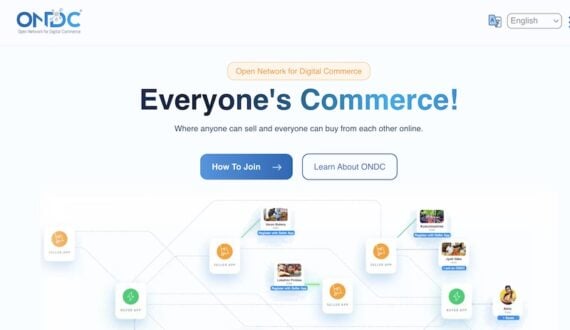
India’s ONDC aims to help small, local merchants, yet brands can access it, too.
Why ONDC
The ONDC, launched in 2021, is an open-source commerce framework. Unlike marketplaces such as Amazon India and Flipkart, ONDC connects apps, payment providers, and logistics companies through open standards and rules.
ONDC aims to enable kirana owners and independent merchants to engage in online commerce without locking them into a single marketplace.
The initiative has picked up across India, though not to the extent of UPI.
Beyond the SMBs, local brands use it as an additional distribution channel rather than a marketplace replacement. And foreign companies that otherwise comply with India’s rules can access the ONDC seller app ecosystem.
Apps on ONDC differ for sellers and buyers. Seller apps enable merchants to list products, manage inventory, and fulfill orders. Leading seller apps include Mystore, CostBo, and GoFrugal.
Buyer apps are for shoppers to browse and purchase. Paytm , Bajaj Finserve, and Magicpin are popular options.
Selling fees on ONDC range from 3% to 10%, much lower than marketplaces’ 18% to 40%. Plus, sellers control their presence and approach with the infrastructure’s transparent algorithm, non-discriminatory sorting, and portable ratings.
To access, brands register with a seller app. The products are immediately exposed to other apps. Shoppers on one buyer app can purchase goods from another.
Categories
ONDC’s network spans retailers, logistics service providers, restaurants, and hotels. Grocery, food delivery, and home and kitchen items scale faster due to higher order frequency versus fashion, pharmaceuticals, and hospitality.
Foreign brands on ONDC include Red Bull, Unilever, Nestle, PepsiCo, Procter & Gamble, L’Oreal, and Johnson & Johnson. Many global food brands on quick commerce platforms such as Blinkit, Swiggy Instamart, and Zepto access ONDC at minimal cost.
Brands new to India must first understand the regulatory challenges. The selling options — marketplaces, distributors, D2C sites, and cross-border — I described last month.


 AI Shopping Could Mean Fewer Returns
 New Ecommerce Tools: September 23, 2026
 Shopify Opens to Meta Muse; Amazon Balks
 New Ecommerce Tools: September 30, 2026
 Don’t Make Them Count
 New Ecommerce Tools: October 7, 2026