


November 2026 gives ecommerce content marketers opportunities to celebrate Route 66, explain the science behind everyday products, revisit 1976, explore television history, and rethink the traditional holiday gift guide.
Content marketing is the act of creating, publishing, and promoting content to attract, engage, and retain customers. The best-performing content is useful, informative, or entertaining, especially in the AI era.
Here are five content marketing ideas your business can use in November 2026.
Route 66 Turns 100

A century later, Route 66 still points toward the American road trip.
America’s famous Route 66 emerged from a patchwork of local roads, state highways, and gravel tracks that planners connected into something now legendary.
On Nov. 11, 1926 — 100 years ago — the route received its famous number, linking Chicago with Los Angeles across roughly 2,400 miles. Yet it wasn’t fully paved until 1938.
The highway mattered not for where it went, but for what rose alongside it. Gas stations, diners, motels, repair shops, and roadside attractions followed the traffic, turning automobile travel into an economic engine for hundreds of communities.
For ecommerce content marketers, the opportunity may be connecting the fabled corridor’s cultural significance with the products their stores sell.
- Outdoor retailers could publish Route 66 guides.
- Apparel brands could revisit American road-trip style.
- Home decor shops could feature neon signs and roadside architecture.
- Automotive merchants could trace a century of driving culture.
Explain the Science

A cast-iron skillet is simple cookware with surprisingly serious physics behind it.
A cast-iron skillet, running shoe, rain jacket, and bag of coffee have something in common. Each depends on science that most shoppers rarely consider.
Why does cast iron hold heat so well? How does a waterproof jacket keep rain out while letting moisture escape? Why does changing the grind size alter the taste of coffee?
November gives content marketers a reason to answer those sorts of questions. International STEM Day (i.e., Science, Technology, Engineering, Mathematics) falls on Nov. 8, followed by World Science Day on Nov. 10.
For ecommerce businesses, the opportunity is to take something familiar and explain how it works. The best science content starts with a question a customer might actually ask.
50-Year Lookback

1976 had a look, and it was not shy about it.
Call this idea a retrospective. Looking back 50 years gives content marketers a way to demonstrate how products, tastes, technology, and customer expectations have changed or stayed the same.
For November 2026, that means revisiting 1976 and comparing then and now.
A merchant could ask:
- What did this product category look like in 1976?
- What did consumers buy, wear, or use?
- How have materials, technology, design, or prices changed?
- Which 1976 products or styles have returned?
A fashion retailer might compare 1976 styles with current trends. An electronics shop might juxtapose a 1976 device and its modern equivalent. A kitchen store could revisit appliances, cookware, or recipes from the era.
The idea could also work as a photo essay, timeline, video, or interview with long-time customers or industry veterans.
The point is not simply to be nostalgic. It is to use 50 years of change to tell a better story about the products a merchant sells.
World Television Day
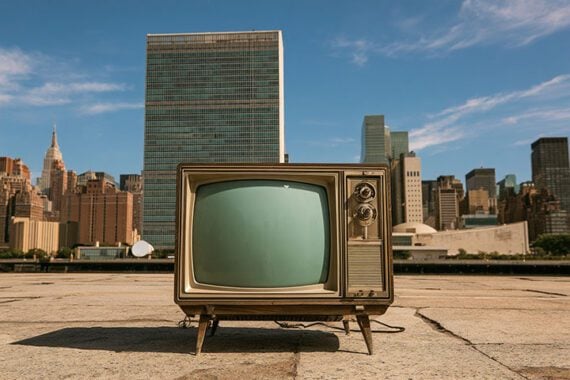
Before streaming, television was the center of the room and often the center of the culture.
On Nov. 21 and 22, 1996, the United Nations hosted its first World Television Forum, bringing together media leaders from more than 50 countries to discuss television’s growing influence and its role in shaping public opinion.
A few weeks later, the U.N. General Assembly designated Nov. 21 as World Television Day, recognizing television as a force in communication, globalization, and cultural exchange.
That history opens the door for content marketers to address television’s impact on their products, such as fashion, food, cars, homes, toys, technology, and popular culture.
Here are some example articles for World Television Day.
- Men’s fashion shop: “From ‘Miami Vice’ to ‘Mad Men’ — TV Shows That Changed How Men Dress”
- Kitchen supply store: “How Julia Child and Television Changed the American Kitchen”
- Toy retailer: “When Saturday Morning Cartoons Sold Toys”
- Auto accessories seller: “How Television Ads Changed the Way Americans Buy Cars”
The Anti-Gift Guide
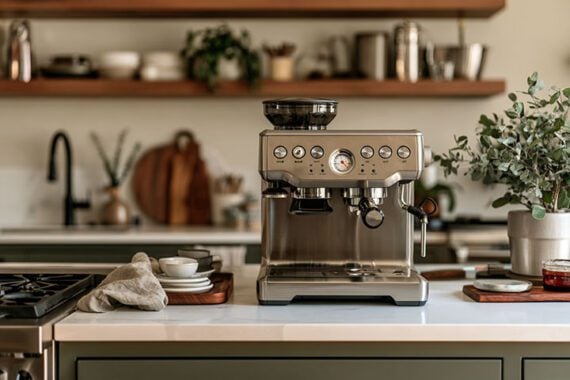
A high-end espresso machine is a great gift for the right person, or an expensive countertop ornament for the wrong one.
November has no shortage of gift-giving guides.
But contrarian merchants might also experiment with an anti-gift guide, especially for AI shopping.
Instead of “10 Great Gifts for Coffee Lovers,” a specialty retailer might publish “Don’t Buy Your In-Laws an Espresso Machine.”
The article could explain who will love an espresso machine and who may be happier without it. It might cover counter space, cleaning, grind adjustment, learning curve, and coffee habits.
That specificity could help the merchant stand out in search results, give email subscribers something more entertaining than another product roundup, and provide genAI platforms useful context about the product fit.
The anti-gift guide is not really anti-gift. It is pro-fit.



 New Ecommerce Tools: September 16, 2026
 New Ecommerce Tools: September 23, 2026
 Test Your Products for AI Discovery
 Branded Sites Are Vital for Merchants
 Shopify Opens to Meta Muse; Amazon Balks
 AI Shopping Could Mean Fewer Returns