

I’ve interviewed a slew of impressive entrepreneurs on this podcast. Drew Fallon is among the most versatile. He and I last spoke in 2022 when he had co-founded a tattoo skincare company. Before that he was an investment banker.
He now runs Iris, an AI-driven financial modeling platform, while also tracking and reporting on consumer-focused M&A transactions.
In our recent conversation, he shared the benefits of agent-powered automation, common merchant use cases, and, yes, the enterprise M&A boom in 2026.
Our entire audio is embedded below. The transcript is edited for length and clarity.
Eric Bandholz: What the heck do you do?
Drew Fallon: I’m the founder and CEO of Iris. We work with brands to deploy AI agents and automate many of their financial and operational workflows.
Prior to Iris, I was a co-founder of the tattoo skincare company Mad Rabbit for about five years, serving as CFO and COO. Before that I was an investment banker. Iris launched two years ago.
Bandholz: I’ve seen your social media posts announcing M&A deals. How do you obtain that info?
Fallon: I’ve got a handful of AI agents that crawl the web. They know what I’ve written and care about. They will surface those types of stories to me. I then pick them and blast them out.
The last couple of weeks have been crazy. Unilever scooped up Grüns, the nutritional gummy snacks, for $1.2 billion. The Finnish Long Drink, a citrus-flavored alcohol beverage, has just sold to the Mark Anthony Group, the company that owns White Claw. Huel, a British meal-replacement company, sold for $1.1 billion to Danone, the global food and beverage giant.
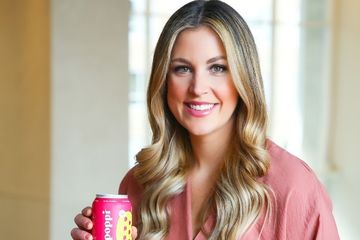
A lot is going on now, but very few big deals occurred in 2025. You had Poppi and Siete Foods, both acquired by PepsiCo. But overall the year was pretty lackluster for M&A.
But now we’re seeing deals of all sizes. There was a lot of pent-up demand, in part from privacy equity firms that had raised a lot of money.
Bandholz: Should today’s brands focus on mass consumers or on high-price-point niches?
Fallon: I would avoid price-conscious shoppers, especially if I were an emerging brand. It’s much better to pursue a high-dollar niche. Beardbrand, your company, is a good example. Not every dude with a beard will spend the money on your products, but those who really care about their beard will.
We’re seeing good traction with premium supplements, beauty, apparel, and food and beverage niches.
Bandholz: Tell us more about Iris’s use of AI.
Fallon: We started the company roughly when ChatGPT launched. I knew I had to be involved with that industry. Think of Iris as the data infrastructure to deploy AI agents. We integrate with Shopify, Amazon, Walmart, Facebook, Gusto, Rippling, bank accounts, credit cards, Bill.com, QuickBooks, and others.
We operate like a centralized data warehouse. We transform the data so AI agents can use it easily. Our agents are purpose-built for automating finance workflows. But the Iris infrastructure could create all sorts of agents. We’ve chosen to tackle financial models, inventory needs, business intelligence dashboards, cash flow forecasts — pretty much anything that an internal or fractional CFO would do.
For example, we help merchants determine how much to spend on customer acquisition. We’ll analyze variables such as gross margin, channel mix, operating expenses, and cash balances. A client could ask us for the profitability of $60, $70, or $80 CAC. We’ll provide the trade-offs for each and suggest the best channels for scaling.
Our inventory planning models are demand-driven. We first predict sales, then we look at the historical product mix, both seasonally and in aggregate. From there, it’s a basic mathematical model to estimate product distribution, such as 15% for beard oil, 25% for balm, and so on.
We can also model inventory velocity in December versus July, for example.
Bandholz: How can people hire you or reach out?
Fallon: Our site is IrisFinance.co. I’m on X and LinkedIn. My Substack newsletter is “Making Cents.”





 AI Shopping Could Mean Fewer Returns
 New Ecommerce Tools: September 30, 2026
 Don’t Make Them Count
 Retail Media's Opportunity Cost
 New Ecommerce Tools: October 7, 2026
 Guardrails for Google Ads AI