


Like fashion and architecture, web design enjoys an ever changing ebb and flow as trends become popular, become mainstream, and then become passé. To maintain a modern and aesthetically-pleasing look, web designers should examine current trends, estimate their staying power, and implement those techniques that will have the best and longest effects.
In this edition of “Web Design Tips,” I am going to share some trends that I think are worth following.
Content Sliders
Content sliders, which are also called slideshows or carousels, have been around in ecommerce for a few years (i.e., box store behemoth Walmart has had a slider on its website since 2007, if memory serves). Content sliders are great for at least three reasons.
First, content sliders provide interaction. Adjusting a slider gives customers an opportunity to interact with the site.
Next, content sliders convey professionalism. As simple as content sliders are to implement, they demonstrate a level technical prowess, which many online shoppers equate with professionalism.
Finally, content sliders are a very functional way to manage content. A slider allows site designers to put a lot of good content on a page, without consuming a lot of on-page real estate.
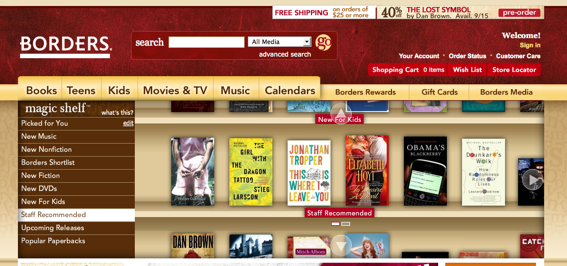
Borders Magic Shelf slides both horizontally and vertically to view books, music and more.
You can find examples of ecommerce content sliders at:
- Walmart – this one is even labeled “slide”
- Borders – the Magic Shelf slides both horizontally and vertically
- Cabela’s – this slider shows off deals and specials
- Blooming Bods – fun designs slide by at this site
- Nordstrom – this slider features stylish controls and great images
Adobe Flash
Rich Internet applications are the future of ecommerce, and Adobe Flash is the technology platform that is most likely to succeed. Integrating Flash or Flex into your ecommerce site can significantly improve user experience and represent a competitive advantage.
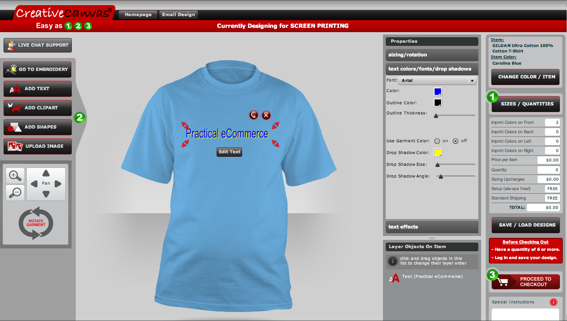
Creative Advertising USA’s Creative Canvas is a a great example of Flex in action, allowing users to customize garment orders.
Good examples of Flash or Flex on ecommerce sites include:
- Creative Advertising USA’s Creative Canvas – just a great example of Flex in action
- Crumpler – providing a user experience you cannot find elsewhere
- Volkswagen’s Used Car Locator – find your used car in the U.K.
- KnickerPicker – virtual models actually try on outfits for you
Big
It may seem strange to describe “big” as a design trend, but it is indeed the case. Modern web designers are using big fonts, big logos, and big images to make big impressions. Tiny fonts and mini-thumbnails are out; ecommerce is ready for the big time.
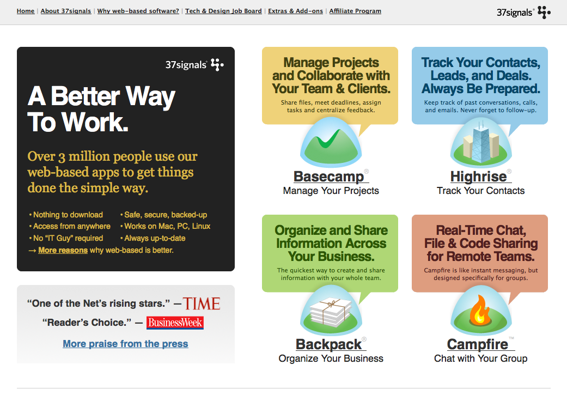
37signals uses large font sizes on its home page.
Big examples include:
- 37signals – check out the font sizes on this page
- Hula Hangout – has a big logo
- Zumiez – not bashful about offering 25 percent off in big letters
Resources
- Smashing Magazine’s “Web Design Trends for 2009”
- Web Designer Wall’s 2008 Design Trends





 Retail Media's Opportunity Cost
 New Ecommerce Tools: October 7, 2026
 New Ecommerce Tools: October 14, 2026
 New Ecommerce Tools: October 21, 2026
 Guardrails for Google Ads AI
 Desktop Habits Hide Mobile Friction