


In “10 Ideas to Grow Ecommerce Profits in 2012,” my previous article, I suggested that merchants expand into foreign markets to grow profits. In this article, I’ll address how to do that without spending a lot of money.
1. Sell on Current Website, Ship from U.S.
Your international customers can buy directly from your U.S. site and you can ship their order to their international location. This is the fastest way to start selling internationally. Though you will have to know the customs, duty and shipping restrictions, your existing shipment provider can provide assistance.
For example, DHL offers “Trade Automation Service” that helps you estimate the total landed cost that your international customer will have to pay. It is a free service that can be accessed from a browser, or integrated into your checkout process using XML. Most small retailers that have low volume of international shipments can use the browser-based version to determine the total landed cost and then notify the end customer of the total order value — which includes the shipping cost — for payment.
2. Sell Your Products on an International Marketplace
You can sell products on international marketplaces like eBay, Buy.com and Rakuten to start generating revenue from customers outside the U.S. For business-to-business sales, Alibaba is a good site to list your products. We spoke with an Alibaba executive about that recently, in “How to Source Products from China, and Sell There Too.”
Your business will have to comply with the rules of the international marketplaces before you can start selling. For example, Rakuten requires that you register your business in Japan before you can sell on the site.
3. Ship Internationally Using a Third-Party Service
There are several options available to ship internationally if you can afford to spend a few dollars a month to work with a third-party.
- Use a service like Bongo International, MyAmericanShipper or GetMyUSMail, which allow you to ship all international shipments to a single U.S. address. The service provider then forwards the order to the international destination, handling all the complexities of customs, duty and regulations.
- Use a shipping consolidation service like BorderJump to ship international orders to a U.S. hub and the service provider will consolidate the orders by country and ship them together to the end customers, reducing shipping costs
- Sign up with a site that shops on behalf of the international customer and then consolidates and ships the order internationally. Companies that offer this service are MyAmericanShopper and American-Checkout.
- You can also sell using services like iGlobalExports, where the service provider buys products at a discount from you and then fulfills the order for the international customer. Your site just needs to integrate with the service provider.
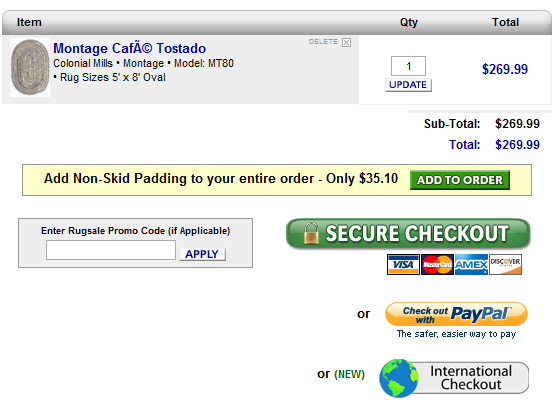
A third-party service can help you sell internationally without handling the complexities of international markets yourself.
4. Drop Ship Internationally
If you use drop-ship vendors, check if they will ship orders internationally. This can enable you to start selling there immediately. Otherwise you can pursue two other options: (a) Find drop-ship vendors who will ship internationally; or (b) Find drop-ship vendors in foreign countries. This will work only if your site sells products that are offered by foreign drop-ship vendors or you are willing to change your product set.
5. Partner with an Overseas Company to Stock and Ship your Products
This option will work well if your customers are concentrated in a certain region. You can establish relationships with one or more fulfillment and logistics companies in that region and ship them your products in bulk. They can then fulfill the orders directly for that region. This is being practiced by numerous larger retailers, for example, who source their products from the China and Taiwan region. Instead of first shipping the products to U.S. and then shipping them back to customers in China and Taiwan, they are using logistics partners in those regions.
Similarly, Shapiro.com offers a program to Fulfillment by Amazon U.S. merchants, to store and ship their products in Europe.
6. Support International Payment Methods
JCB credit cards hold more than a 40 percent market share in the Japanese market. Bank transfer is the preferred payment method for online transactions in Germany. eWallets are growing in the Nordic region. With so many different payment methods used worldwide, it’s important to use them based on your target markets. You can integrate with these payment methods directly from your ecommerce platform — the cheaper option — or integrate with a company that offers these services, such as WorldPay, CyberSource, and 2Checkout. Most of these companies integrate easily with popular ecommerce platforms and they also offer payment settlement and fraud management.
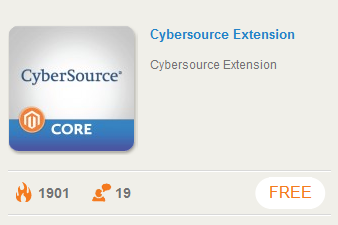
International payment methods can integrate quickly and easily with your existing shopping cart.
7. Support International Currencies
There are several different ways to support international currencies on your site. You can manually create prices in different currencies and, depending on the end user’s country, show prices in the associated currency. You could also integrate with currency exchange rate sites like Oanda.com to display prices in local currencies based on the current exchange rate. Some retailers prefer integrating with services like E4X, which displays the product price in the customer’s native currency but the retailers are paid in U.S dollars.
8. Offer Local Customer Service
To meet the customer service needs of your non-English-speaking customers, hire native speakers or partner with companies like Orium to assist your foreign customers. This can be expensive; it is important to identify which markets absolutely need these native speakers. In other smaller markets, provide as much local-language customer service information online as possible, in a FAQ page and a customer service knowledge-base page. Also provide an email address for those customers.
Importantly, train your customer service team on all aspects of your business. They should understand (a) the calculations for customs and duty, (b) how to process refunds based on your policy and (c) how to help customers with their returns-related questions.
9. Localize your Site
To offer a better experience to your customers, localize your site based on their country and language. This can be done using a translation vendor like FoxTranslate or by using a software solution like OneLink from Translations.com or by integrating your ecommerce site with FiftyOne.com, which provides localization services. All of these options need to be reviewed based on your needs and your target markets. The priority should be to localize the checkout flow first, then the product catalog, and lastly the instructional text on the pages.
Translation is only one aspect of localization. It also includes making changes to support local address formats, date formats, and cultural variations. Localization involves setting up country-specific domains for your business. This helps improve the natural search engine ranking in that country and also helps compete better with other local businesses.
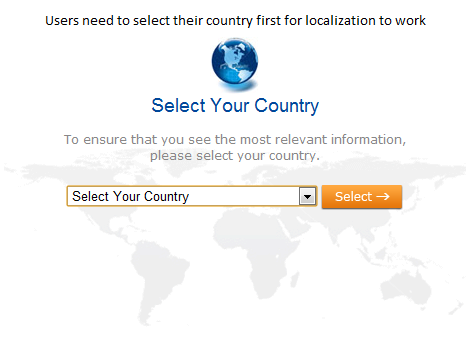
Localization adapts your site to the language and culture of your customers, making them more comfortable.
10. Implement a Global eCommerce Solution
A global ecommerce solution will provide much flexibility along with a well-structured process for on-boarding countries for international selling. The solution will have a matrix to manage rules for different locales — e.g. shipping providers by region and payment methods. This is a relatively expensive option as it requires time and effort to design and implement the solution. But it can eventually be cost effective if your global site generates millions of dollars in annual revenue. Larger retailers use products like Oracle’s ATG or IBM’s WebSphere Commerce package to do this. Those solutions resolve the technology aspect of international selling. The people and processes still need to be worked out by the retailer.
Summary
As a retailer, one or more of these options may help you start selling internationally. The key is to identify your larger target markets, know your product offering, determine a budget, and then pick the options that will work for your business.





 Retail Media's Opportunity Cost
 New Ecommerce Tools: October 7, 2026
 New Ecommerce Tools: October 14, 2026
 New Ecommerce Tools: October 21, 2026
 Guardrails for Google Ads AI
 Desktop Habits Hide Mobile Friction