


Ecommerce business owners face risks. Some may keep you awake at night. Others are routine and you really don’t think about them.
The ones that keep you awake at night are most likely the least understood — or outside of your control. A key to business success is to mitigate your risks by better understanding the issues and how you will react to them. If nothing else, you may sleep better.
The Business Aspects of Ecommerce
This article continues my series on the business aspects of running an ecommerce firm. To date, the series includes the following installments.
- Who Needs an Ecommerce Strategy, Anyway?
- What’s the Value Proposition of Your Ecommerce Company?
- Choosing Sales Channels to Reach Target Consumers
- 7 Key Ecommerce-Infrastructure Decisions
- Building the Right Ecommerce Team for Success
- Is Your Ecommerce Model Profitable and Sustainable?
- Achieving Your Ecommerce Business Goals
For this article, I’ll examine two different types of risk and how you can leverage them to build a better business. I’ll call them “operational risks” and “assumptive risks.”
Operational Risks
If you have an established business that’s running smoothly, you still have risks that can slow your growth or halt your sales. These “operational risks” are ever present and frequently outside of your control. They could include the following.
- Search engine optimization risk. Google changes its search engine algorithms and your website traffic drops by 50 percent overnight.
- Hosting risk. Your website hosting company suffers a series of failures and your stores are offline for hours.
- Price competition risk. Your largest competitor drops prices by 30 percent and your sales suffer.
- Supplier risk. Your top-selling product line is suddenly pulled from the market and you are faced with a huge loss of revenue.
- Shipping risk. A container load of products from an overseas supplier is stuck in customs because of a change in policy or an error in the shipping manifest — you have little inventory to sell.
- Marketplace risk. You sell products on Amazon that it does not carry but it suddenly sources the products itself, at a much lower price.
In those examples, the risk is not something you can directly control. Market forces, economic conditions, competitive strategies, and governmental regulation can impact your business. But, you can make contingency plans to mitigate the risks.
For example, if you are heavily dependent on Google’s organic search traffic for your sales, make sure you understand which keywords convert and set up AdWords advertising campaigns that utilize those keywords and landing pages. In the event you are affected by an algorithm change, you can quickly turn on pay-per-click campaigns to remain visible to those searching on your keywords.
If your competitors decide to lower prices, you need to be in a position to quickly respond. Consider how you might lower your prices in response, or introduce a campaign to emphasize your superior service, free shipping, or rewards program.
The point is to take the time to identify the operational risks that would most impact your business. Think through ways to mitigate the impact if any of those scenarios were to actually happen. Make sure you prioritize. Once you deal with one type of risk, move it down the list and look at the next one.
Assumptive Risks
If you are a startup or expanding into uncharted markets or products, your risk lies in the assumptions you use for planning your new venture. You have to make assumptions, since you have little or no historical data to draw on.
For a new ecommerce business, your assumptive risks will likely include:
- Estimated website traffic;
- Conversion rates;
- Average sales order size;
- Cost per acquisition from advertising;
- Operating costs;
- Gross margins;
- Market demand for your products;
- Cost and time to build out your website.
As with operational risk, you must first identify the assumptive risks you face and prioritize them. Rather than first thinking about what to do if the results are different than your assumptions, you need to test your assumptions as much as possible to validate them.
There are many ways to test assumptions. First, conduct industry research to determine as much as you can about your competitors. You can use tools to look at their website traffic and how they invest in pay-per-click advertising. You can research conversion rates for businesses operating in a similar space.
You can also survey prospective customers or ask them to test a mockup of your website. If you are selling a single product or product line, you can test sales using different landing pages to monitor conversion rates. Do some polls in Facebook or Twitter or other social media channels.
Interview other ecommerce business owners in non-competitive spaces. Ask them about conversion rates, seasonality, what their average order size is and so forth. You’ll find business owners willing to talk to you if they don’t see a competitive threat. I learn something every time I talk to another ecommerce company, even if I am the one supposedly providing the insight.
My Startup Example
I’m a co-founder of a startup that plans to develop and sell a consumer product online and through alternative retail channels. We are working on our business model, focusing on the market and how our product fits into it. We think we understand the customer need and have a viable solution to that need. But we have a lot of assumptive risk in our plan.
We are using many of the principals of the Lean Startup Methodology — a process of launching new businesses — to help identify our riskiest assumptions and test them before we invest in either a prototype or the production of the product.
"The Lean Startup" is a methodology of launching a business efficiently and without wasting money.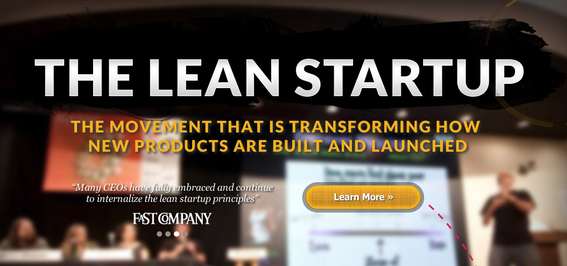
We’ll be conducting hundreds of interviews to test different product concepts and price points. Some will be face-to-face interviews with our target customers. Some will be with potential resellers. Most will be via our website using short surveys. We’ll also be using our website to gauge various product and price offerings and our brand messaging using A/B split testing.
Our goal is to validate our assumptions before we invest a lot of money. If we find an assumption that is invalid, we will reevaluate our solution and alter it to find the best market and product fit. That may involve changing our product, targeting a different market, or both. It may also mean we determine we don’t have a viable business. Regardless, we will make a minimal investment and gain knowledge. We’ll also minimize our risk before we invest heavily.
Summary
Regardless of where you are in the lifecycle of your business, you should monitor the risks you face and how you might deal with them. If you don’t recognize and address them, you may someday face a dire situation. Identify your risks, try to quantify their impact on your business, and then evaluate alternatives that will reduce or eliminate them.





 AI Shopping Could Mean Fewer Returns
 Shopify Opens to Meta Muse; Amazon Balks
 New Ecommerce Tools: September 30, 2026
 Don’t Make Them Count
 Retail Media's Opportunity Cost
 New Ecommerce Tools: October 7, 2026