


ChatGPT, Claude, Gemini, and other generative AI platforms occasionally include source links in their responses. The links are called citations and may appear within an answer or in a separate panel, often to the right.
Understanding the citation algorithms is key to creating an optimization strategy. Here’s what we know about genAI citations.
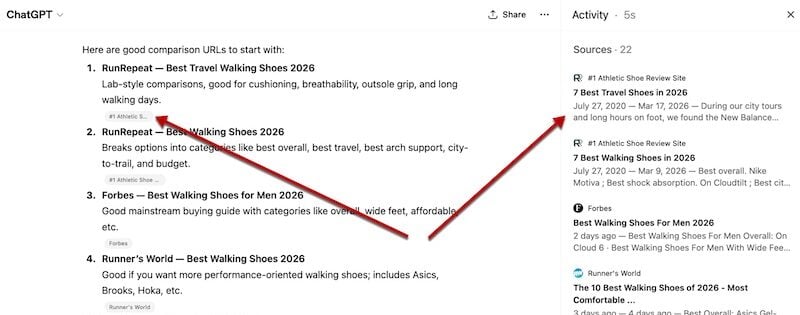
Citations in ChatGPT often appear in a right-side panel. Click image to enlarge.
Citation Methods
No leading genAI platform has explained its citation algorithm or provided optimization guidance. Yet it’s clear from analyzing citations and traditional search rankings that Google powers ChatGPT, Gemini, AI Mode, and Grok, while Brave drives Claude and Perplexity.
Thus maintaining high rankings on both of those search engines increases the likelihood of being cited. An exception is ChatGPT’s practice of citing its publication partners regardless of external rankings.
Citations and Sources
From patents and independent studies, we know of four types of citations.
Grounded citations influence the answer itself. The platforms run searches, crawl the content of indexed pages, and quote those sources in the response.
Ungrounded citations support and confirm the platforms’ existing training data without influencing the answer directly. I call these “reverse” citations for that reason. Presumably ungrounded citations exist to foster accuracy and objectivity from known, reliable companies.
The frequency of ungrounded citations is largely a mystery. However, a recent New York Times article referred to an analysis by Oumi, an AI development firm, that found “more than half” of the citations on AI Overviews (powered by Gemini) are ungrounded.
Ghost citations are links in answers that lack a source name. This presumably occurs because the source didn’t explain how its product or service solved the query. According to a study published this month from search optimizer Kevin Indig, 61.7% of answers include a ghost citation.
Invisible citations are not, in fact, citations; they are instances of genAI using a site’s info without mentioning or linking to it. A study released this month by Ahrefs found 50.2% of URLs retrieved by ChatGPT remain uncited. Moreover, in my experience, Reddit threads often influence answers, but very few are cited.
GEO Strategy
Knowing how genAI citations work can help elevate your business’s visibility.
Influencing an answer is different from being cited in it. Still, appearing in any answer is better than not, especially if it includes your products.
Training data is fundamental. GenAI platforms may answer queries from varied sources, but start with training data. The platforms may search Google or Brave only after creating an answer, or they may provide an answer exclusively from external pages.
Regardless, direct or indirect associations with prompts expose a brand to the platform. That’s the priority.





 3 AI Prompts for Google Ads
 Double-Digit Ecommerce Growth Returns
 5 Predictions for 2026 Holiday Shopping
 New Ecommerce Tools: August 12, 2026
 New Ecommerce Tools: August 19, 2026
 Auto-Translate Won't Win E.U. Shoppers