


Ecommerce merchants in Africa combine online-store software, local payment methods, messaging tools, verification services, and delivery providers.
The exact combination depends on the country and whether the merchant sells through a website, Instagram, WhatsApp, or physical stores.
Ecommerce platforms
WooCommerce. The open-source WordPress plugin is popular in Africa. As of June 2026, Store Leads, an ecommerce data provider, reports 56,458 active WooCommerce stores in South Africa, 16,634 in Nigeria, 10,821 in Kenya, and 3,134 in Ghana. Merchants control hosting, checkout, and integrations but are responsible for security, maintenance, and plugin compatibility.
Shopify. Store Leads tracks 22,977 active Shopify stores in South Africa and 13,828 in Egypt. Egypt is the exception among the markets in this article, with more Shopify stores than WooCommerce. Shopify Payments is unavailable to merchants in Africa, forcing them to connect to third-party gateways.
Bumpa. The Nigeria-based platform serves more than 136,000 businesses across Nigeria and Kenya. It combines an online store with inventory, payments, bookkeeping, customer management, and delivery integrations.
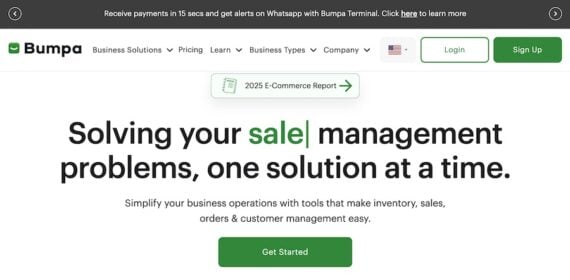
Bumpa serves over 136,000 businesses in Nigeria and Kenya.
Wuilt. The Egypt-based store builder reported that more than 20,000 merchants joined within months of its free launch in 2025. The platform combines store creation, product management, payments, and delivery integrations.
Payments
Payment tools are more country-specific than store software.
Paystack. The Stripe-owned provider counts roughly 200,000 sellers across Nigeria, Ghana, Kenya, South Africa, and Côte d’Ivoire. Payment methods vary by country and include cards, bank transfers, and mobile money.
Flutterwave serves 2 million businesses in 34 of Africa’s 54 countries. The wider coverage suits merchants selling throughout the continent.
M-Pesa, owned by Safaricom, a telecommunications company, is central to online payments in Kenya. The tool serves 1.1 million active Lipa na M-Pesa (“Pay with M-Pesa”) merchants in its 2026 financial year (PDF). Safaricom’s Daraja gateway embeds M-Pesa payments into websites and mobile applications.
Pesapal provides payment processing services to 50,000 merchants across Kenya, Uganda, Tanzania, Rwanda, and Zambia. It combines mobile money, cards, and local-currency settlement.

Pesapal provides payment processing services to merchants across Kenya, Uganda, Tanzania, Rwanda, and Zambia.
Yoco. The South Africa-based payment firm serves 200,000 merchants and processes 30 million card transactions annually. Its tools include online payments, point-of-sale operations, and stock management.
Payfast. Approximately 80,000 South Africa businesses use Payfast’s merchant services. Its Shopify and WooCommerce integrations make it a common payment option for online stores.
Paymob. The Egypt-based payments company serves 390,000 businesses and supports more than 50 payment methods, including cards and digital wallets, according to Forbes Middle East.
Fawry. The Egyptian payment network reported 354,000 payment-enabled points of sale at the end of 2025 (PDF). Customers initiate orders online and complete payment through physical agents and kiosks.
Hubtel. The Ghana-based platform serves 8,000 businesses and reaches over 4 million consumers annually. It combines mobile money, cards, Ghana Quick Response payments (a QR code system), settlements, and management tools.
Operations and delivery
WhatsApp Business. Merchants use WhatsApp for product inquiries, order confirmation, customer support, and post-purchase communication.
Termii. More than 20,000 African businesses use the Termii messaging platform for one-time passwords, transaction alerts, delivery updates, and other automated communication.
QoreID. The identity-verification provider serves more than 1,000 businesses. BusinessDay, the Nigeria-based financial publication, reports that QoreID has completed 100 million verifications. Merchants use it to verify customers and sellers and assess high-risk transactions.
Pargo. The pickup network operates more than 4,000 collection points in South Africa, Kenya, Egypt, and Saudi Arabia. It replaces uncertain residential deliveries with known retail and locker locations.
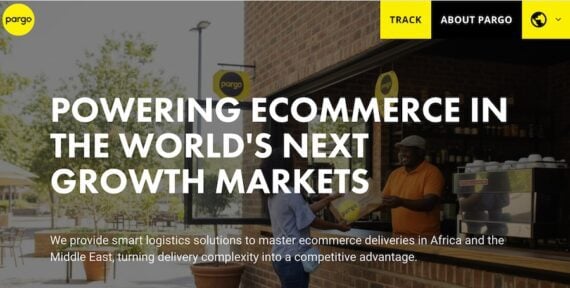
Pargo operates 4,000 collection points in South Africa, Kenya, Egypt, and Saudi Arabia.
OkHi. The address-verification platform confirms customer locations via mobile devices. Techpoint, a media firm, reported that OkHi has verified more than 300,000 addresses in Kenya.
Shipbubble. The Nigeria-based logistics platform compares carriers, generates labels, automates fulfillment, and tracks deliveries. Its Bumpa integration launched in 2025.
Bob Go. The South African order management platform works with more than 6,000 businesses that ship 4 million parcels annually. It connects ecommerce stores to multiple couriers through one interface.
Bosta. The Egypt-based courier serves 50,000 merchants and processed 37 million parcels in 2025. Its network includes more than 50 fulfillment hubs.




 AI Shopping Could Mean Fewer Returns
 New Ecommerce Tools: September 23, 2026
 Test Your Products for AI Discovery
 Shopify Opens to Meta Muse; Amazon Balks
 New Ecommerce Tools: September 30, 2026
 Don’t Make Them Count