


AI can shift ecommerce pricing from one-size-fits-all to systems that adapt to shopper behavior and context, preserving margins.
Promotions, coupon codes, and bundles have long meant that two shoppers often pay different amounts for the same item. But now those variations can be intentional, measured, and optimized.
For years enterprise retailers have benefited from dynamic pricing thanks to investments in technology and expertise. Many of those tools, including do-it-yourself versions, are now available to smaller merchants.
The result enables real-time pricing decisions based on signals such as shopper intent, timing, and history — less about short-term conversions and more about protecting margin across many transactions.
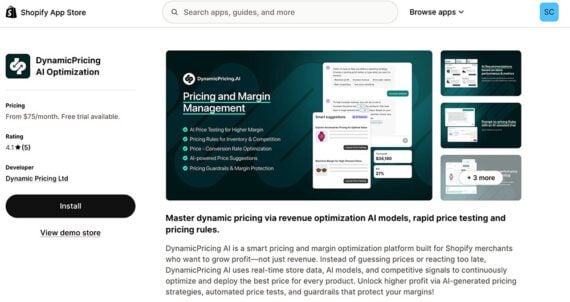
Personalized tools such as DynamicPricing.ai are available on the Shopify App Store for smaller companies.
Offer and Price
The rise of AI agents enables ecommerce pricing to be an offer-and-price system that evaluates each session and decides whether to intervene.
The system could answer three questions in real time:
- Should the AI intervene at all?
- What type of intervention is appropriate?
- And what level of personalization is acceptable?
Thus, the system moves from static pricing to dynamic decision-making to convert a specific shopper while protecting margin. It is custom pricing in a less offensive way.
Instead of blanket or rule-based promotions, merchants can offer incentives only to shoppers who would likely respond, while preserving full-price transactions where possible.
Over time, the AI would likely reduce unnecessary promotions and improve the margin per order.
Perception
Displaying different prices for the same item tends to create friction or even anger among shoppers.
Hence opponents of dynamic, personalized offers often call it “surveillance pricing” and believe monitoring behavioral signals, such as repeat visits, browsing depth, and referral sources, is unseemly.
Many retailers disagree, but the concern is real. Shoppers do not evaluate prices purely on economic terms. They judge fairness, consistency, and intent.
Bernard Meyer, AI operations manager at Omnisend, the marketing platform, shares that concern. He told me, “Consumers might have made peace with AI helping them shop, but there’s a very clear line between assistance and manipulation. The practice of using AI to adjust prices…has drawn understandable criticism.
“Our data shows consumers will share personal information if it helps them make better decisions, but not if it’s used against them. After years of inflation and constant price changes, people have a much clearer sense of what’s reasonable, and they’re far less tolerant of anything that looks like they’re being taken advantage of,” Meyer added.
Discounts and perks, on the other hand, are easier to explain and usually more acceptable. The outcome is the same: Margins are preserved. But a system that optimizes when to show discounts rather than lowering list prices feels better.
Instead of offering 10% off to everyone, merchants can reserve incentives for targeted shoppers. That alone can protect margins.




 AI Shopping Could Mean Fewer Returns
 New Ecommerce Tools: September 23, 2026
 Test Your Products for AI Discovery
 Shopify Opens to Meta Muse; Amazon Balks
 New Ecommerce Tools: September 30, 2026
 Don’t Make Them Count