

Automation tools and AI-generated applications offer merchants new ways to tackle repeated tasks. Perhaps none are as game-changing as vibe-coding.
Managing an ecommerce shop in a competitive market is demanding. There are orders to process, campaigns to manage, customers to service, and many repetitive tasks such as reporting and monitoring.
Familiar Solutions
Until recently, only a few practical options could complete the never-done tasks:
- Do it manually.
- Subscribe to a SaaS solution.
- Hire a developer to build something.
Imagine you sell the popular Funko collectibles. Lots of folks buy them, and lots of competing stores sell them.
To track competitors’ prices, you could occasionally visit a handful of sites to ensure your prices are in line.
Or you could use a price intelligence tool such as Prisync, Price2Spy, or Competera, or hire a developer to build your own.
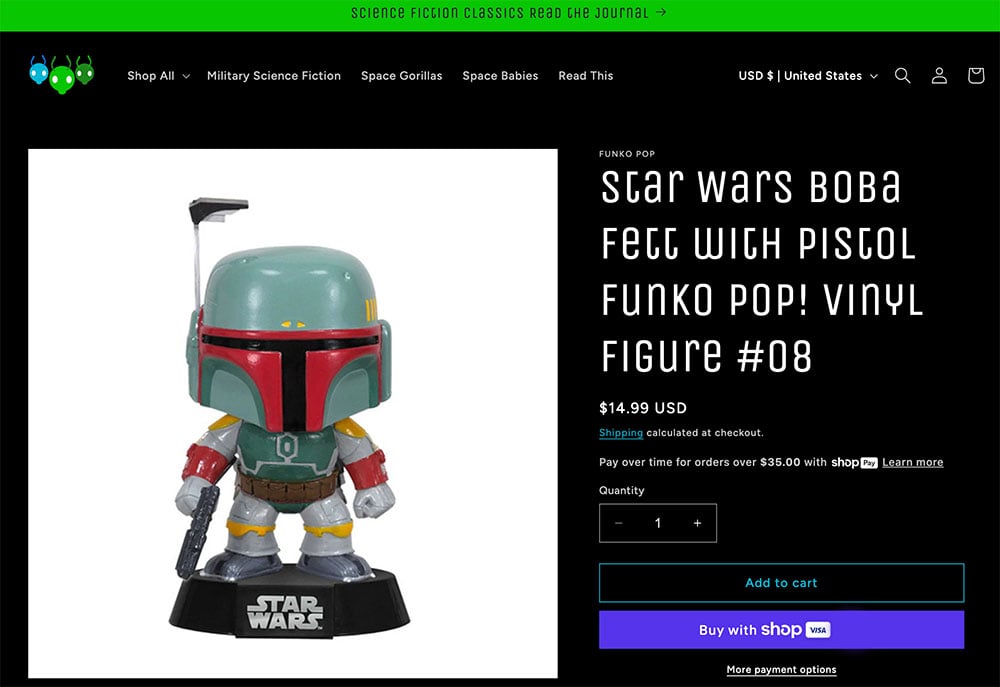
Comparing competitive prices is a repetitive but necessary task.
Automation
That last option — build your own tool — is what has changed most in 2026.
To be clear, developing an internal tool is not new. I wrote a tutorial in 2015 for that purpose: “Monitor Competitor Prices with Python and Scrapy.” I provided step-by-step instructions for building a basic web scraper and included Python code examples.
In February this year, I wrote a follow-up, “AI Revives Ecommerce DIY,” that addressed how automation platforms and AI were making it relatively easy to create internal software tools. I again used the example of a competitive price automation, this time on the n8n platform.
Since then, n8n added a more advanced web scraper, a database for storage, and an AI chat interface so you can ask questions about price changes and price trends over time.
Vibe Coding
Yet AI is changing so fast that I’m revisiting, in this article, the idea of inexpensive, readily available tools to solve many retail and ecommerce software needs.
This example uses vibe coding, the process of creating a software application by describing the need in natural language to an AI tool.
In the past two months, I have seen more than a dozen examples of vibe-coded applications running in production environments. None are specific to ecommerce or retailing, but they point to what’s possible.
Here are a few examples:
- A marketing executive built a SaaS tool that sells for a $1,500 annual subscription. He has several customers.
- A CEO developed an interstitial advertising app that places “rewarded ads” between his company’s media site and external links.
- A software engineer built a tool to monitor incoming bug reports, analyze them, and, when feasible, draft code changes and pull requests.
- A friend vibe-coded a tool to read Little League baseball box scores and suggest improvements to his coaching.

Competitive Vibe
Anyone can start vibe coding via Claude, ChatGPT, or a related tool. Type something like “Make me a price intelligence tool.”
What follows is a back-and-forth conversation with the tool, producing and updating prototypes based on feedback. You can, however, improve the process and reduce the AI credits by planning the app with a separate AI or in a separate mode.
For this example, I used ChatGPT to develop a concise and detailed prompt for Replit, the vibe coding tool that built the application. (I could have used Replit’s own planning mode.)
My initial input into ChatGPT was extensive and included:
- Project identity and purpose. What is the app meant to do?
- Technology stack. Are there any technology requirements? Specific AI models or specific APIs. If it is an API, include a link to the documentation.
- Data requirements. What data to capture? Are there specific storage requirements?
- Authentication. How should the login work? Are there different user roles?
- Screens and views. What should a user see when completing some task or interacting with the app?
- Testing. Should the app include any automated testing?
- Design requirements. Are there any visual elements or standards to consider? Do you want specific fonts or colors?
Creation
Based on that initial input, ChatGPT generated a vibe-coding prompt. I read the plan, asked a few questions, and requested changes.
Eventually, I used the ChatGPT-produced prompt for Replit, the vibe coding AI in this example. It took Replit 18 minutes to build the first version of my price-comparison app, which I called “Funko Price Intel Tool.”
The tool provided (hypothetical) 90-day price history of Funko collectibles from Amazon, Walmart, Entertainment Earth, and Science Fiction Classics.
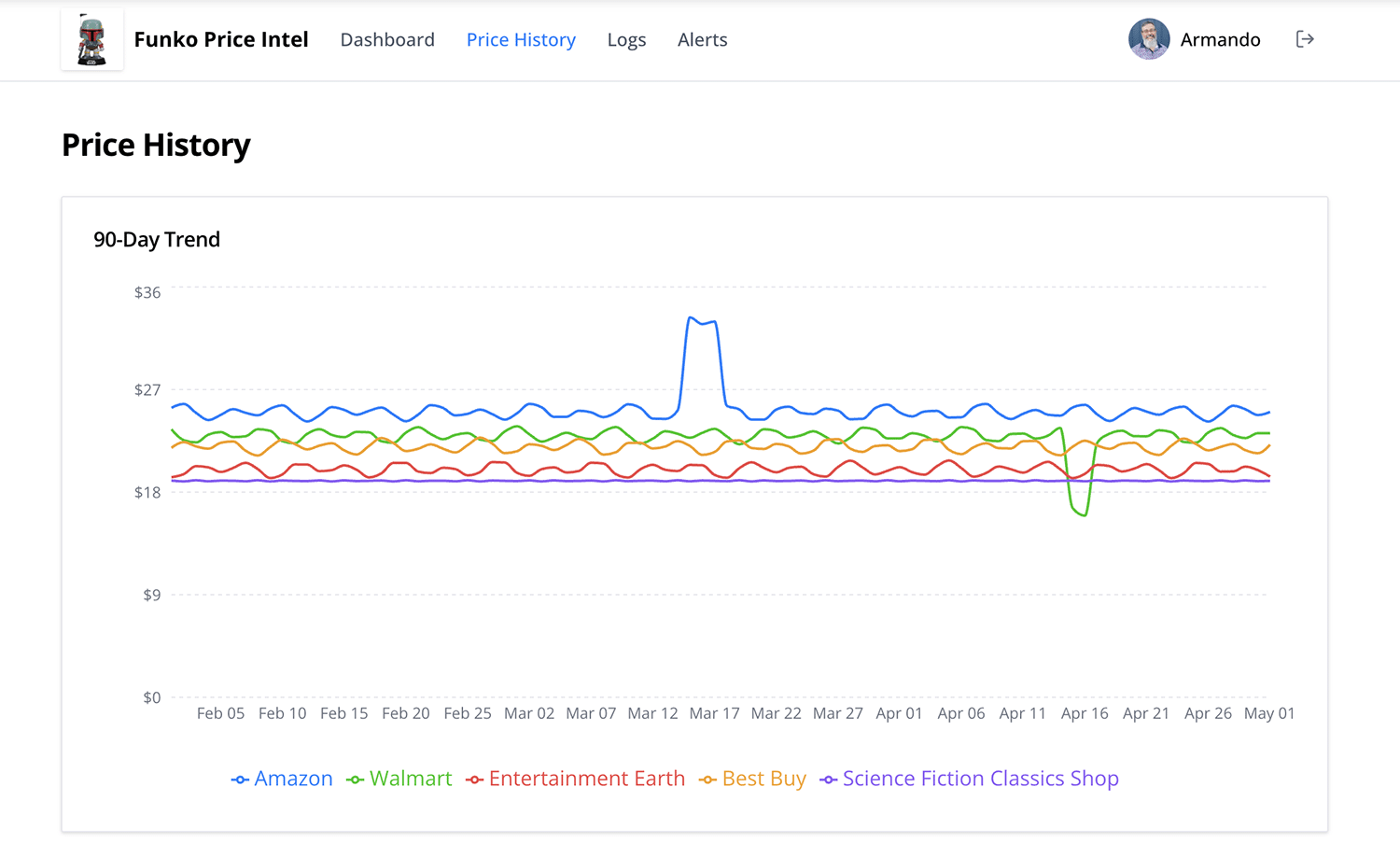
The basic price history graph tracks price changes over time. Click image to enlarge.
It also included a daily price table, a field for a message if the price moved more than 20%, and a link to the product page. A log tab keeps track of scrapes and notes any scraping errors. After testing, my new tool proved functional.
Nearly anyone can do something similar.
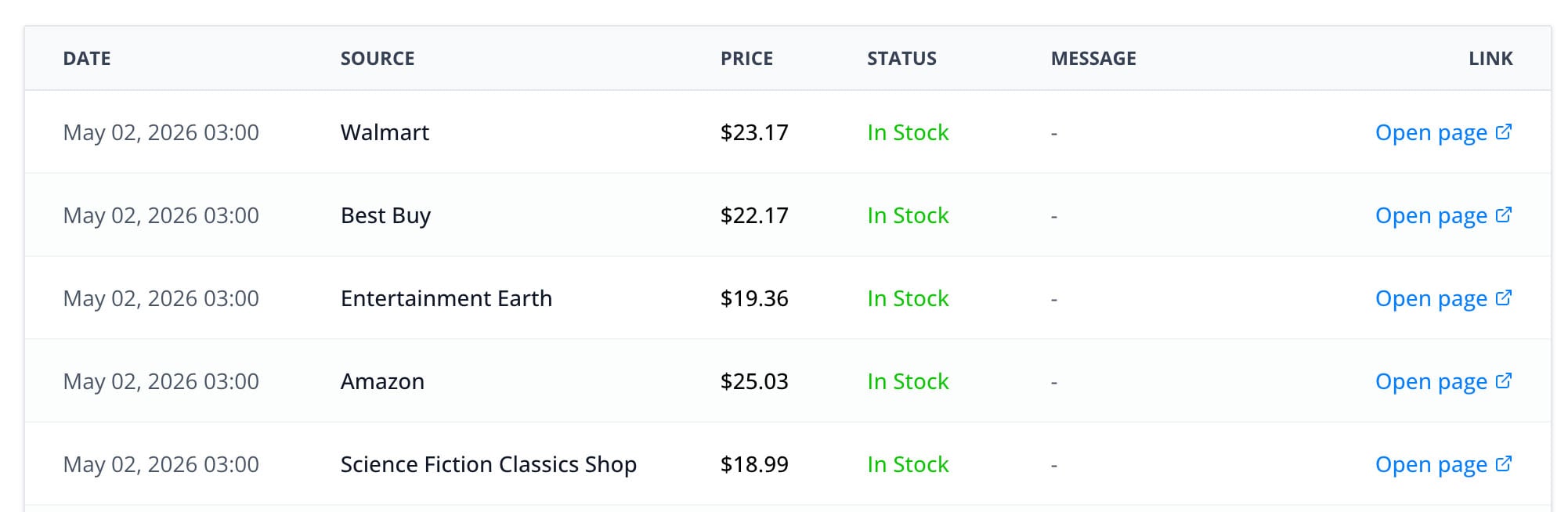
A price table shows the price at each store, each time the data is collected. Click image to enlarge.
Vibing
Vibe coding does not replace all SaaS tools or professional developers. Both remain the best options for mission-critical systems. But automating routine, repetitive tasks is much easier.





 AI Shopping Could Mean Fewer Returns
 New Ecommerce Tools: September 23, 2026
 Shopify Opens to Meta Muse; Amazon Balks
 New Ecommerce Tools: September 30, 2026
 Don’t Make Them Count
 New Ecommerce Tools: October 7, 2026